
Well-being for Public Housing in Hong Kong
Scope
- User Research
- Stakeholder and User Engagement
- User Interviews
- Brainstorming and Co-creating Sessions
- Prototyping
- Stakeholder Engagement
- Community Engagement
- Hosting Events
- Facilitating Cross-Sector Relations
- Guideline Writing
- Policy Advisory
Client
Status
Location

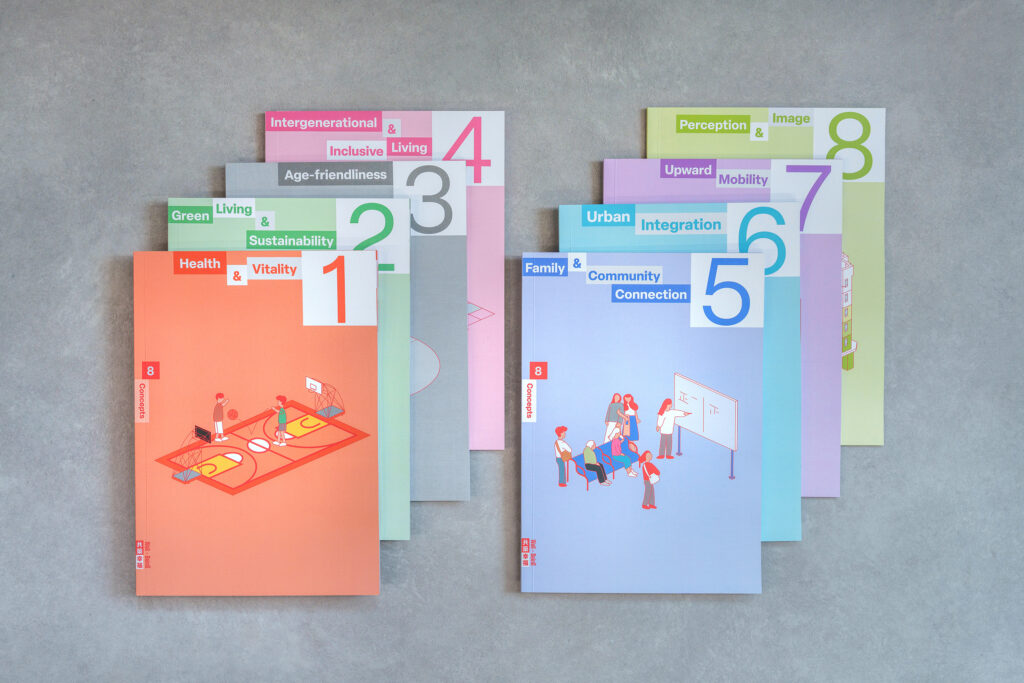
Hong Kong faces unique challenges in public housing design due to its high population density, with over one-third of residents living in public housing developments. The Housing Bureau and the Hong Kong Housing Authority have continuously enhanced public housing quality. Beyond the goals of “Enhancing Quantity, Speed, and Efficiency” to promote increased public housing supply, they have evolved toward a more comprehensive vision of “Enhancing Quality,” improving residents’ well-being by focusing on their psychological, social, and environmental needs. The Well-Being Design Guide represents a new approach, transforming public housing from basic shelters into environments that actively nurture holistic well-being.


“Well• Being” is led by the Housing Bureau and the Housing Authority of the HKSAR Government, with the Neighbourhood Innovation Lab bringing together a group of experts including design thinking and innovation consultants, architects, landscape designers, visual designers, urban planners, real estate scholars, engineering and management experts, nursing professionals, and social workers. They employ “design thinking” and “participatory design” approaches to systematically research and integrate human-centred well-being design guidelines, aiming to create public housing that is simple yet comfortably livable, making residents feel at ease and well-being.


We employed multiple complementary methods, visiting seventeen districts across Hong Kong, conducting extensive professional discussions, research analyses, literature reviews, resident interviews, and community surveys, collecting input from 3,000 public housing residents and 630 professionals. Combining qualitative research, literature reviews, and case studies, they transformed academic findings into practical design solutions that effectively address community needs.
The design guidelines are people-centered, starting from neighborhood relationships and encompassing eight well-being elements in four domains: Personal Health (Vitality & Health, Green Living); Neighborhood Care (Elderly-Friendly Living, Intergenerational Integration); Estate Facilities (Family-Community Connection, Urban Linkage); and Social Value (Value Addition & Upward Mobility, Place Image). This framework comprehensively understands how physical environments affect residents’ well-being across different dimensions.
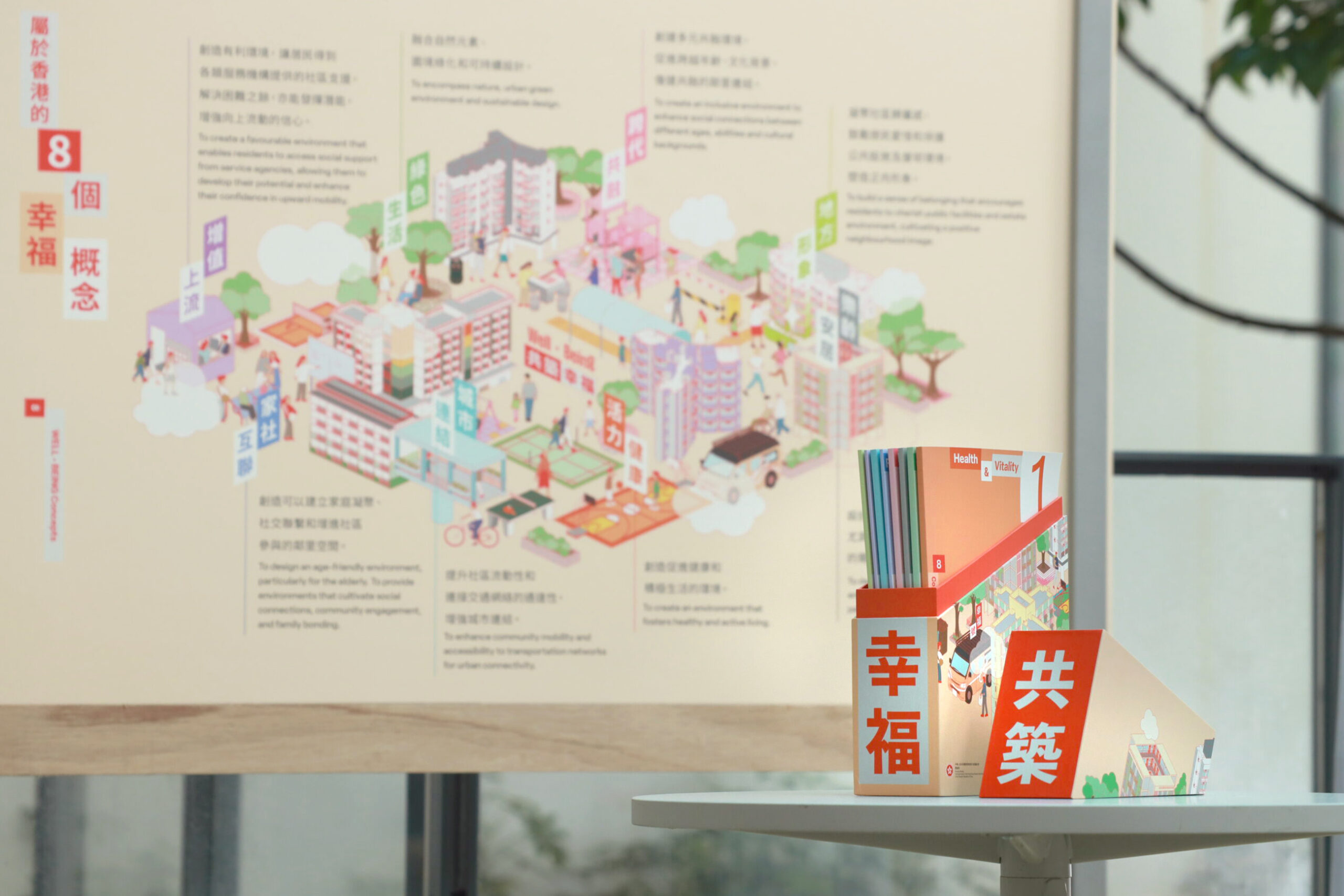
This initiative challenges conventional architectural practice in three fundamental ways: replacing top-down planning with collaborative co-creation that recognises residents as experts in lived experiences; expanding planning beyond physical structures to include community activities, addressing both “hardware” and “software” needs; and shifting evaluation from quantitative measures to qualitative outcomes like well-being. The “Wellbeing for HA” design guidelines serve as references for new public housing and renovations of existing estates and aim to promote innovative developments in planning, design, and implementation across all housing types in Hong Kong.
- 20+ Estates
- 3000+ Public Housing Residents
- 300+ Professionals & Officials
Key Partners
- Hong Kong Design Centre
- The Hong Kong Polytechnic University (School of Design, School of Nursing, Department of Building and Real Estate)
- Cohere Design Limited
- Gehl Architects ApS
- Habitat for Humanity Hong Kong
- Kay Chan Design
- Masterplan Limited
- Playright Children’s Play Association
- WSP
- 1 Step Association
- Caritas MCSK Community Centre
- Mr. Clifton Yeung (Ex-Principal Education (Development & Administration), Po Leung Kuk)
- Culture Homes / Forward Living
- Direction Association for the Handicapped
- Food Angel
- Health in Action
- Hong Kong Federation of Handicapped Youth
- Our Hong Kong Foundation
- QBS System Limited
- Professor Rebecca Chiu (Honorary Professor of the Department of Urban Planning and Design)
- Ms. Rosita Wong (Vice President of the Hong Kong Institute of Housing)
- SKH Lady MacLeHose Centre